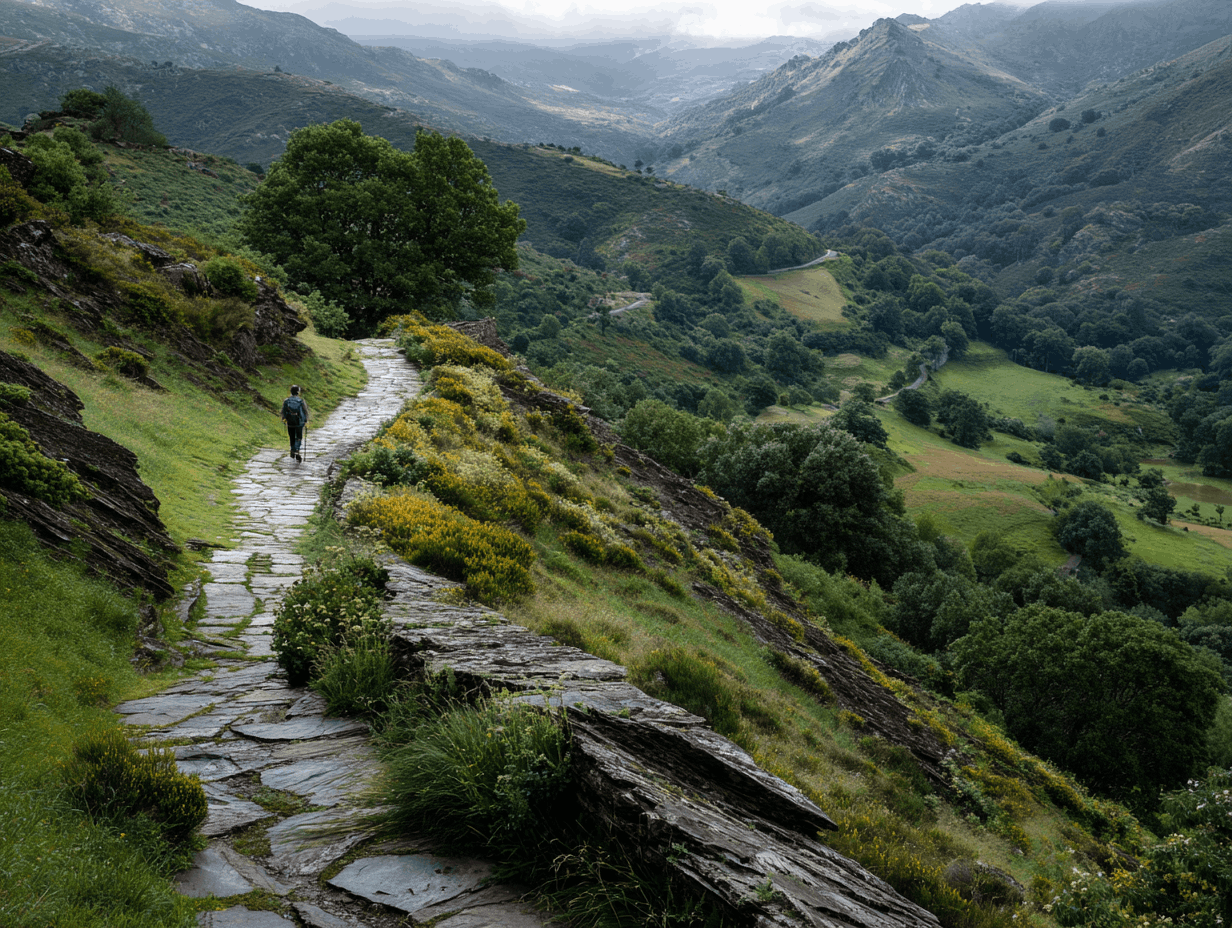
The Camino de Santiago is more than just a walking route. It is one of the oldest and most meaningful journeys in Europe, a pilgrimage path that has been traveled for over a thousand years. Crossing the north of Spain, this route ends at the magnificent cathedral in Santiago de Compostela, where the remains of Saint James are believed to rest.
Most pilgrims follow the French Way, which stretches about 800 kilometers from the Pyrenees to the Atlantic. It is not only about the destination but the experience of walking day after day through changing landscapes, meeting fellow pilgrims, and discovering small villages that time seems to have forgotten.
Main stops along the route
The journey usually begins in Saint Jean Pied de Port in France or Pamplona in Spain. Early days take you through the green hills of Navarra and the vineyards of La Rioja. You then reach Burgos with its impressive Gothic cathedral, followed by the beautiful city of León.
The final stretch passes through the rolling hills of Galicia, with its green forests and small stone villages. The last stop is of course Santiago de Compostela, where pilgrims traditionally arrive at the square in front of the cathedral and celebrate their long journey.
How many days do you need
Most people take between 28 to 35 days to walk the full route. If you have less time, you can walk only the last 100 kilometers from Sarria, which still allows you to receive the official certificate. Even with a shorter section, plan at least 7 to 10 days to feel the real spirit of the Camino.
Best time to visit
The most popular months are May to June and September to October. The weather is usually mild, the fields are green, and there are fewer crowds than in July and August. Summer can be very hot, especially in the middle sections, while winter brings rain and shorter days.
Best moments on the route
Reaching the Iron Cross (Cruz de Ferro) at the highest point of the Camino is a deeply emotional moment for many pilgrims. Another highlight is walking through the ancient oak forests before Santiago. Arriving at the cathedral square and watching the evening light on the stones after weeks of walking is something that stays with you forever.
Hidden gems along the route
While big cities get attention, the real magic is in the small places. The quiet village of O Cebreiro with its ancient stone houses feels like stepping back in time. Many pilgrims love the small wineries in the Rioja region where you can taste local wine after a long day. Look for hidden monasteries and small family-run albergues where the owners share stories and homemade meals.
This route perfectly shows the meaning of Pure Routes. There are no crowded tourist checklists here. Instead you walk at your own pace, meet people from all over the world, and connect with history in the most authentic way possible.
The Camino de Santiago is not just a physical journey. It is about simple mornings with coffee and fresh bread, the sound of your footsteps on ancient paths, and the feeling of arriving somewhere important. Many travelers say this route changes them in ways they never expected. It teaches patience, gratitude, and the joy of moving forward one step at a time.
Most routes are designed for 5 to 10 days. We always suggest the ideal duration so you can enjoy the journey without feeling rushed.
We recommend booking accommodation and main transport ahead, especially in popular seasons. However many smaller experiences can be decided on the way.
Yes, most of our routes work great for solo travelers, couples, and small groups. We note the difficulty level and best travel styles for each route.
Absolutely. Our routes are flexible guides. You can adapt them to your own pace and interests.